

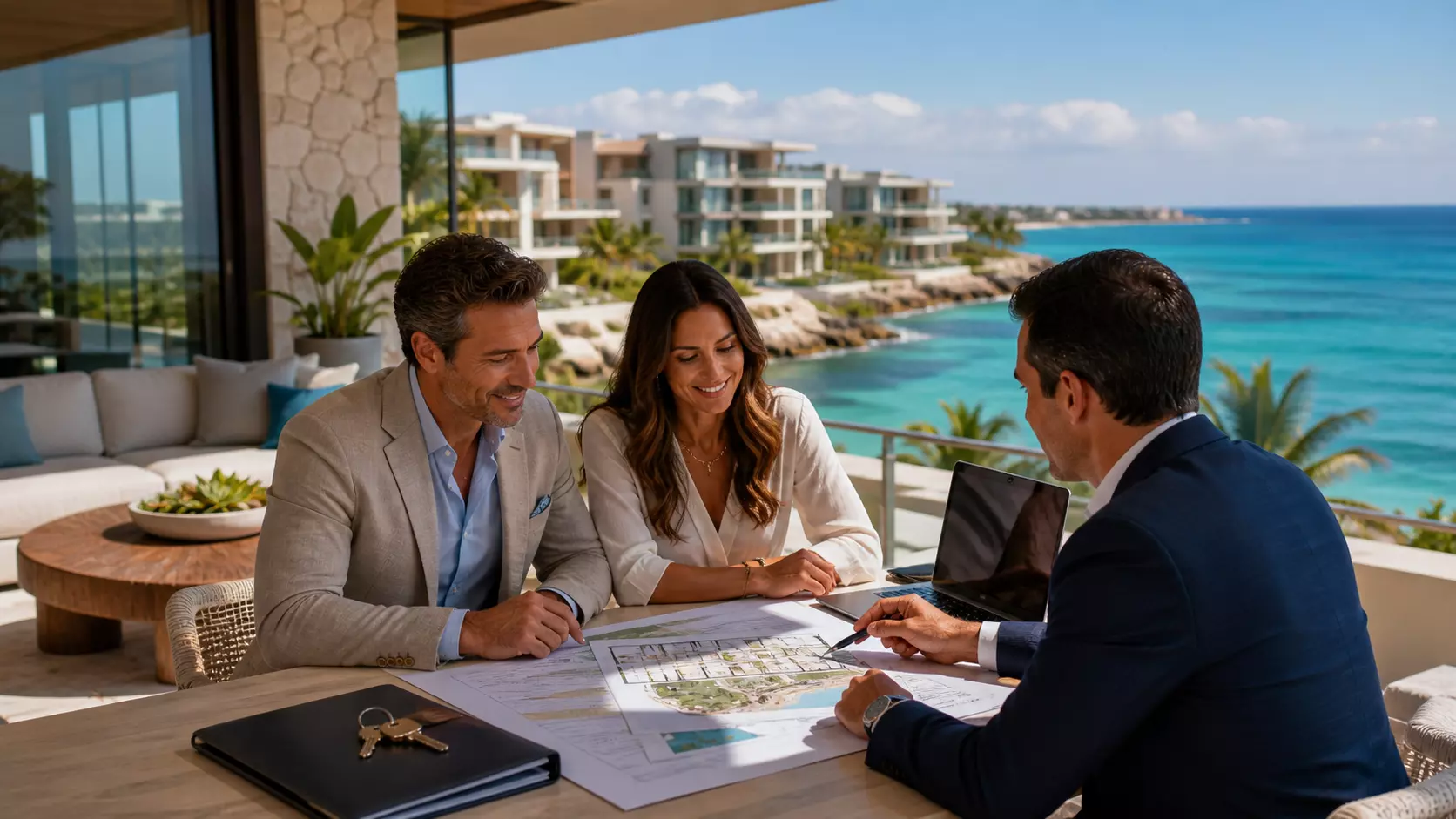
A beachfront condo in Tulum or a villa near Playa del Carmen often starts as a lifestyle idea, then quickly turns into a practical question: can americans buy property in mexico? The short answer is yes. Americans buy real estate in Mexico every year for vacation use, rental income, relocation, and long-term wealth preservation. The better question is how to buy correctly, especially in high-demand coastal markets where legal structure, title review, and project quality matter just as much as location.
For Riviera Maya buyers, this is where excitement and discipline need to meet. Mexico offers real opportunity, but smart acquisition is about understanding the rules, the ownership options, and the local market dynamics before signing a reservation agreement or wiring funds.
Can Americans Buy Property in Mexico Legally?
Yes, Americans can legally buy property in Mexico. Foreign buyers are welcome in the market, and there is a well-established legal framework that allows non-Mexicans to acquire residential real estate.
The point that often causes confusion is the restricted zone. This includes land within about 31 miles of the coast and about 62 miles of international borders. Since many of the most desirable destinations in Mexico are coastal, this matters. In places like Tulum, Playa del Carmen, Akumal, Puerto Morelos, Cancun, Isla Mujeres, and Cozumel, foreign buyers usually purchase through a bank trust called a fideicomiso.
A fideicomiso is not a workaround or a gray area. It is a recognized legal structure created specifically so foreign nationals can hold rights to property in the restricted zone. The bank holds legal title as trustee, but the buyer is the beneficiary and retains the right to use, rent, improve, sell, or pass the property to heirs. In practical terms, you control the asset.
Outside the restricted zone, foreigners can generally hold property directly in their own name. But for most US buyers focused on the Riviera Maya, the fideicomiso is the standard path.
How ownership works in the Riviera Maya
If you are buying in coastal Quintana Roo, the structure of the purchase matters as much as the property itself. A fideicomiso is typically set up through a Mexican bank and runs for a renewable term. The bank does not manage your daily use of the property or make decisions for you. Its role is to serve as trustee under the legal framework.
This arrangement can feel unfamiliar at first to US buyers who are used to direct deeded ownership. But unfamiliar does not mean unsafe. What matters is that the trust is properly drafted, the seller has clear title, permits are in order, and the closing process is handled by experienced legal and notarial professionals.
Some investors also buy through a Mexican corporation, particularly when the intended use is commercial or when they plan to acquire multiple assets. That can make sense in certain cases, but it is not automatically the best route for every buyer. If the property is a second home or a vacation rental, the right structure depends on your use case, tax planning, and long-term goals.
What Americans should know before buying
The legal ability to buy is only one part of the decision. The real difference between a strong purchase and a risky one usually comes down to due diligence.
In the Riviera Maya, new developments are a major part of the market. That creates attractive entry points, payment plans, and appreciation potential, especially in growth corridors. It also means buyers need to look beyond renderings and headline prices. You want to verify the developer’s track record, construction timeline, land status, permits, HOA framework, and the actual rental positioning of the project.
Resale properties come with a different set of considerations. You need to confirm title history, unpaid taxes or liens, condominium regulations, and whether the property matches what is represented in the documentation. Beachfront and luxury inventory can be particularly compelling, but premium pricing should be supported by quality, scarcity, and realistic income potential.
This is where local guidance matters. A good purchase in Mexico is not just about finding a beautiful property. It is about choosing an asset that aligns with your personal use, return expectations, risk tolerance, and time horizon.
Costs to expect when buying property in Mexico
US buyers are sometimes surprised that the purchase price is only part of the acquisition cost. Closing costs in Mexico can include transfer taxes, notary fees, trust setup fees if a fideicomiso is used, registration costs, legal fees, and due diligence expenses.
The exact numbers vary by state, property type, and transaction structure, but buyers should plan for additional costs beyond the list price. If you are comparing opportunities across Tulum, Playa del Carmen, or Cancun, those differences can affect your net return.
You should also look beyond closing. Annual trust fees, property taxes, HOA dues, maintenance, insurance, furnishing, and rental operations all shape the actual performance of the asset. A lower-priced property is not always the better investment if carrying costs are high or the project is poorly positioned for occupancy.
Financing versus cash
Many Americans purchase property in Mexico with cash, especially in pre-construction or fast-moving markets where stronger offers can create leverage. Mexican mortgage financing is available in some cases, but it is often more limited and less attractive than what US buyers are accustomed to at home.
Developer financing can also be available, particularly on new-build inventory. That can be useful, but the terms need to be evaluated carefully. Flexible payment plans are appealing, yet they should not distract from the more important question: is the underlying project worth owning?
For investment-minded buyers, the capital stack should support the strategy. A property intended for short-term rentals, occasional personal use, and future appreciation has a different profile than a retirement home or a long-term hold for family legacy.
Can Americans buy property in Mexico for rental income?
Yes, and this is one of the main reasons many US buyers enter the market. Riviera Maya destinations benefit from global tourism demand, strong lifestyle appeal, and a broad range of buyer and renter profiles. That creates real income potential, especially for well-located, well-managed properties.
Still, rental income should be underwritten with care. Not every condo in Tulum performs the same way. Amenities, walkability, beach access, brand quality, maintenance standards, and oversupply in a micro-market can all affect results. The difference between an average asset and an excellent one is rarely obvious from marketing materials alone.
This is why sophisticated buyers tend to focus on asset selection, not just destination selection. A region may be compelling, but returns are earned at the property level.
Common mistakes US buyers make
The biggest mistake is treating the process casually because the property feels aspirational. Emotion belongs in lifestyle decisions, but not in due diligence.
Another common error is assuming that all agents, developers, and listings are equal. They are not. Some projects are thoughtfully planned and financially sound. Others are sold aggressively before the fundamentals are truly in place. Buyers who rely only on promotional material can miss critical details.
A third mistake is failing to build the right local team. You want legal review, market insight, and transaction guidance from professionals who understand both the Mexican process and the expectations of international buyers. That is especially important in a market where inventory moves across different price points, delivery stages, and ownership structures.
For buyers working in the Riviera Maya, a specialized advisor can help narrow choices not just by budget or style, but by strategy. That is often the difference between owning something attractive and owning something that performs.
The real opportunity for American buyers
Mexico continues to attract Americans because it offers more than access. It offers a rare combination of lifestyle value, international appeal, and real estate opportunities in markets with long-term momentum. In the Riviera Maya, that can mean a vacation home that generates income, a relocation property in a globally connected coastal setting, or a tangible asset that supports portfolio diversification.
The opportunity is real, but the market rewards clarity. Buyers who know why they are purchasing, what structure fits their goals, and which micro-locations are likely to hold value are in a stronger position than those chasing a trend.
If you are asking whether you can buy, the answer is yes. The more valuable question is whether you are buying the right property, in the right location, with the right guidance behind the decision. That is where confidence starts to replace uncertainty, and where a Mexico purchase begins to look less like a dream and more like a strategic move.

One Response