

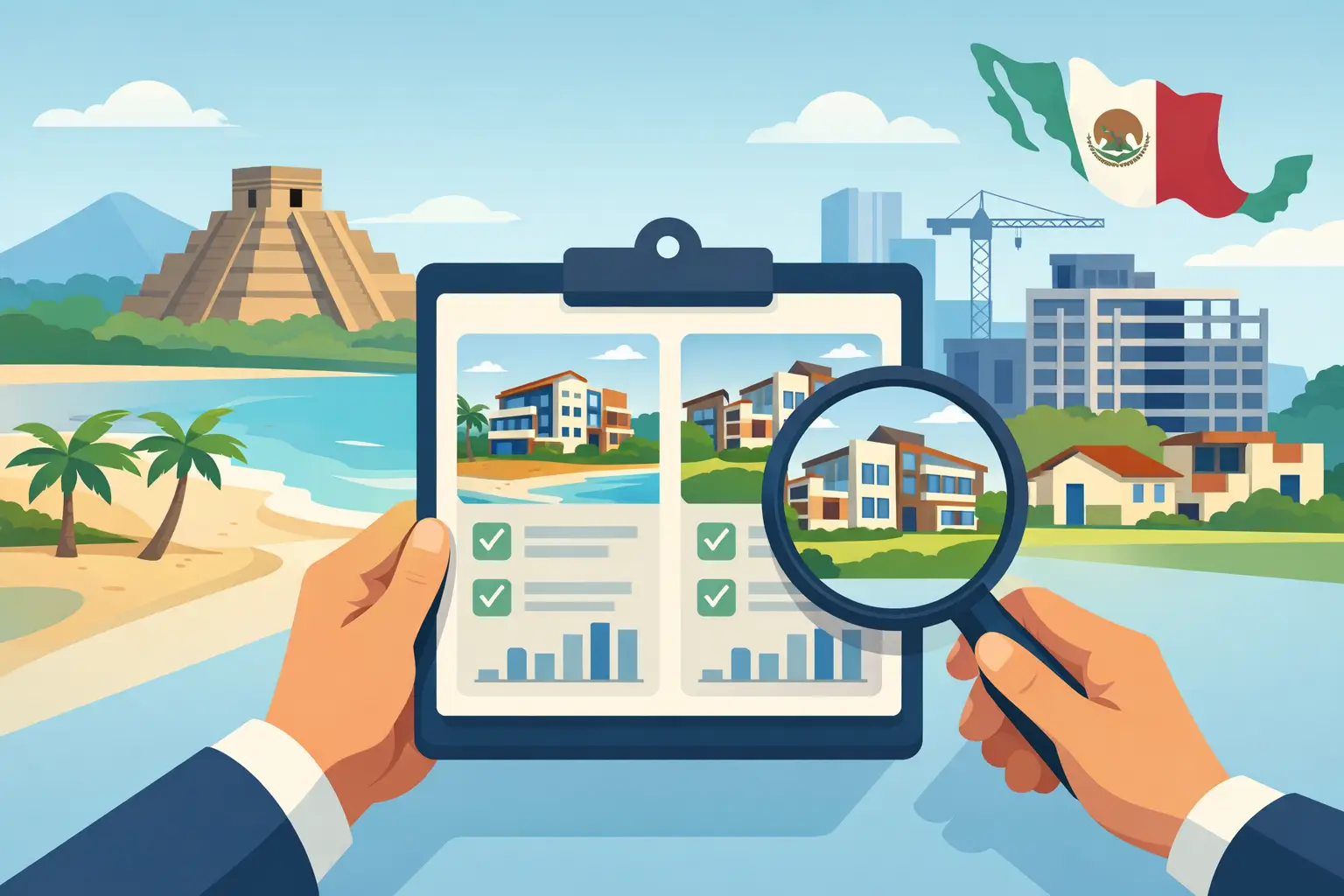
A glossy rendering, a beachfront promise, and a compelling pre-construction price can make almost any project look attractive from afar. The real question is whether the team behind it can deliver an asset that protects your capital, performs in the rental market, and remains desirable when it is time to sell. Learning how to compare Mexico property developers is therefore less about choosing the most beautiful project and more about evaluating execution, governance, and long-term value.
In Riviera Maya markets such as Tulum, Playa del Carmen, Akumal, and Puerto Morelos, buyer demand has created exceptional opportunity. It has also brought a wide range of developers to the market, from established regional groups with multiple delivered communities to newer companies building their first project. Neither category is automatically right or wrong. What matters is whether the developer, the project structure, and your investment objectives align.
Start With a Developer’s Delivered Track Record
A developer’s portfolio should be your first filter. Ask for a complete list of delivered projects, not only current sales launches. Then look beyond the brochure. Visit completed buildings if possible, or have a trusted local advisor inspect them on your behalf.
Pay attention to whether the final product resembles the original sales material. Look at common areas, landscaping, finishes, maintenance standards, and how the building has aged after one, three, or five years. A project can be delivered on time but still underperform if it uses materials that deteriorate quickly in a humid coastal climate or if the owners’ association lacks the resources to maintain the property properly.
Delivery history also reveals how a developer handles pressure. Were previous units delivered within the promised timeframe? If delays occurred, how were buyers informed and supported? Construction timing can shift in any market, particularly when weather, supply chains, or permitting affect a project. The stronger signal is not perfection. It is transparency, realistic planning, and a documented ability to finish well.
For a first-time developer, the due diligence standard should be higher. Investigate the principals behind the company. They may have relevant experience as builders, architects, hotel operators, or partners in previous developments. If their background cannot be independently verified, treat that uncertainty as a pricing and risk consideration, not a detail to overlook.
How to Compare Mexico Property Developers Beyond the Renderings
Most buyers compare layouts, amenities, and price per square foot. Those factors matter, but they do not tell you whether the development is financially and legally sound. A more strategic comparison considers the developer’s business model, the land, the delivery plan, and the quality of the completed asset.
Begin by asking who owns the land and under what legal structure the project is being sold. In Mexico’s coastal restricted zone, foreign buyers commonly acquire residential property through a bank trust, known as a fideicomiso, or through a Mexican corporation when appropriate for their ownership plan. Your attorney should confirm that the development has a clean title path and that the proposed purchase structure fits your circumstances.
You should also understand whether the developer owns the land outright, has an option agreement, or is operating through a joint venture. These structures can all be legitimate, but they carry different levels of complexity. A developer with clear land ownership, established financing, and a defined construction schedule generally presents a more straightforward risk profile than one relying on future sales to secure every stage of the project.
Ask direct questions about permits, environmental requirements, and municipal approvals. In coastal Quintana Roo, these are not administrative footnotes. They can affect construction timing, density, access, and the future experience of owning the property. A professional developer should be prepared to provide documentation and explain the project’s status clearly.
Evaluate Capitalization and Payment Structure
Pre-construction can offer meaningful advantages: early pricing, broader unit selection, and the potential for appreciation during the build. It also requires confidence that the developer has sufficient capital and disciplined financial management.
Review the payment schedule with care. A reasonable structure usually connects payments to meaningful construction milestones, rather than concentrating too much of the purchase price early in the process. The best schedule depends on the project and market conditions, but buyers should be cautious when a large percentage is due before substantial work has been completed.
Ask how construction is funded. Is there developer equity, bank financing, institutional participation, or a reliance primarily on buyer deposits? There is no universal answer that makes one project investable and another unsuitable. However, a transparent explanation gives you a far better basis for evaluating risk.
Your contract should state the delivery date, specifications, consequences of material changes, remedies for significant delay, and the conditions under which deposits are refundable. Have an independent Mexican real estate attorney review every document. A sales contract is not simply a formality. It is the document that defines what you are buying and what protections you have if the project does not proceed as expected.
Assess Construction Quality for the Riviera Maya Climate
Riviera Maya property needs to withstand more than an elegant opening day. Salt air, humidity, intense sun, heavy rain, and hurricane exposure place real demands on construction methods and ongoing maintenance.
When comparing developers, ask about the materials and systems behind the finishes. What waterproofing system is used? How are terraces drained? What type of windows, doors, air conditioning, plumbing, and electrical systems are specified? Is there backup power for essential common areas? How is water stored, filtered, and managed? These details influence both daily comfort and long-term operating costs.
A premium lobby or rooftop pool should not distract from the fundamentals. In a rental-focused property, reliable elevators, strong internet infrastructure, secure access, functional parking, professional waste management, and durable common areas can matter more to guest satisfaction than a long amenity list.
It is also worth comparing the developer’s design discipline. Projects with thoughtful unit orientation, ventilation, shade, storage, and practical floor plans tend to age better than developments designed primarily for visual impact. Rental guests and future buyers notice livability, even when they cannot immediately name it.
Look at Operations, Not Only the Purchase Price
A property can be beautifully built and still deliver disappointing returns if operating costs, rental rules, or management standards are poorly planned. Ask how the condominium will be administered after delivery and whether a professional property management company is already involved.
Review projected HOA fees and ask what they include. A low monthly fee may seem attractive, but it can signal underfunded maintenance in a building with pools, elevators, security, gyms, and extensive common areas. Conversely, a higher fee may be justified if it supports reliable service, reserve funding, and asset preservation.
For investors, clarify rental policy before you reserve a unit. Are short-term rentals permitted? Are there restrictions on platforms, guest registration, minimum stays, or on-site management? Is there a mandatory rental operator, and if so, what fees and revenue splits apply? These terms materially affect your net income and should be evaluated before you rely on optimistic gross rental projections.
A credible developer or sales team should be able to discuss demand drivers for the specific location, not just quote broad Riviera Maya tourism numbers. Tulum’s rental profile differs from Playa del Carmen’s, and a beachfront residence may serve a different buyer than a centrally located condo near restaurants and beach access. Your target guest, holding period, and personal-use plans should shape which project is best for you.
Compare Exit Strategy and Market Positioning
Buying well means thinking ahead to the next buyer. A developer’s brand can support resale value, but the project’s location, supply position, and quality will ultimately matter more.
Compare each development within its immediate micro-market. How many similar units are being built nearby? Does the project offer a genuine advantage through walkability, beach access, views, infrastructure, design quality, or a recognized hospitality affiliation? Is the unit type scarce, or will it compete with hundreds of nearly identical condos when you decide to sell?
Price per square foot is useful only when the comparison is truly comparable. A lower entry price may reflect a less established location, smaller unit dimensions, weaker infrastructure, limited views, or a developer with less proven execution. The right purchase is not always the lowest-priced unit. It is the one that offers a compelling relationship between price, quality, rental potential, and future liquidity.
Build a Decision Process, Not an Emotional Shortlist
Before placing a reservation, compare your top options across the same criteria: delivery record, legal documentation, capitalization, construction specifications, operating costs, rental rules, location, and resale appeal. A simple scorecard can make differences visible when several projects appear equally attractive.
Then give more weight to the factors that match your reason for buying. A lifestyle buyer may prioritize privacy, beach proximity, and design. An income-focused investor may prioritize management, rental demand, and operating efficiency. A family building a long-term Mexico base may place greater value on community, services, and dependable construction than on short-term rental yield.
The Riviera Maya rewards buyers who combine vision with disciplined due diligence. The right developer is not merely selling a residence in an extraordinary destination. They are delivering the foundation for a property that can serve your lifestyle, generate income when appropriate, and hold its place in a globally attractive market for years to come.
