

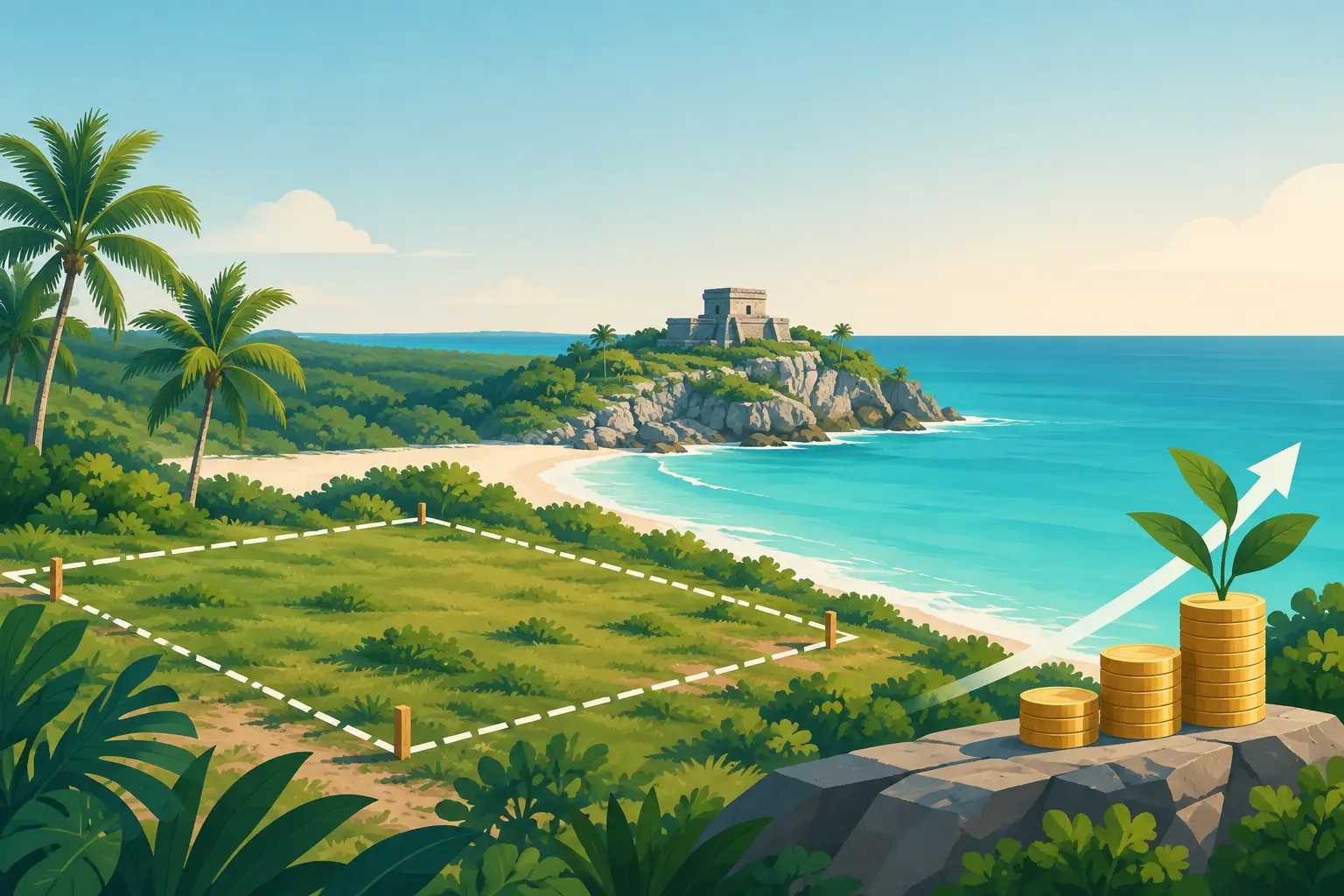
Tulum did not become an international real estate market because of a single master plan. It grew through a rare combination of Caribbean coastline, jungle, design culture, global visibility, and a steady flow of buyers seeking a more flexible way to live and invest. That is precisely why Tulum land investment can be compelling – and why it requires more than choosing a beautiful parcel on a map.
For the right buyer, land offers a chance to participate in a destination’s next phase of growth, create a private residence, or build an income-producing asset with greater control over the finished product. For the unprepared buyer, it can also introduce questions around access, utilities, zoning, title structure, construction timing, and resale liquidity. The difference is careful selection before the purchase, not optimism after it.
Why Tulum Still Attracts Land Buyers
Tulum’s appeal is both emotional and economic. Buyers are drawn to the lifestyle: beaches, wellness, architecture, international restaurants, and proximity to nature. Yet the investment case is broader than a vacation fantasy. The Riviera Maya continues to attract tourism, remote professionals, second-home owners, and internationally mobile families who want access to the Mexican Caribbean without giving up quality design or rental potential.
Land can be especially attractive when built inventory is priced at a premium or when a buyer wants something the existing market does not offer. A thoughtfully designed villa, boutique residential concept, or low-density retreat can stand apart from the many condominium projects competing for the same guest profile.
That said, land is not a shortcut to returns. It generally demands more patience than purchasing a completed villa or a professionally managed condo. There is no rental income on day one, and the value proposition often depends on execution: acquiring well, building appropriately, controlling costs, and delivering a property that aligns with real demand.
Tulum Land Investment Starts With Micro-Location
In Tulum, a few kilometers can change the investment profile completely. Beach proximity may support stronger nightly rates and prestige, but it can also mean higher acquisition costs, stricter environmental considerations, heavier seasonal traffic, and a more limited supply of properly positioned sites. Inland neighborhoods may offer larger parcels and a lower entry point, but their future performance depends heavily on infrastructure, access, and the quality of surrounding development.
Rather than asking which area is “best,” a more useful question is: best for what? A family seeking a legacy home may prioritize privacy, road access, and a calmer daily rhythm. An investor planning a vacation rental may value proximity to established hospitality, restaurants, and transport routes. A developer may focus on permitted density, service availability, absorption in the local market, and a clear buyer profile for the eventual exit.
It also pays to look beyond a project’s marketing boundaries. Visit the parcel at different times of day. Assess the actual road condition, drainage, neighboring construction, noise, and mobile coverage. Ask what is already built, what has been approved nearby, and what remains speculative. Tulum rewards informed conviction, not assumptions.
Infrastructure Changes the Equation
Road improvements, airport connectivity, utility expansion, and commercial development can improve the appeal of an area over time. But infrastructure headlines should never substitute for parcel-level due diligence. A future road is not the same as a reliable road today. Promised water service is not the same as confirmed connection capacity.
The strongest land opportunities are often those where the investment thesis works under current conditions and gains additional upside if the surrounding area matures as expected. Buying solely for a future announcement can turn a strategic acquisition into a long holding period with limited flexibility.
The Legal and Due Diligence Questions That Matter
International buyers can acquire property in Mexico, including within the restricted zone near the coast, through an established legal structure such as a bank trust, known as a fideicomiso. In some cases, a Mexican corporation may be appropriate, particularly for certain commercial activities. The right structure depends on the buyer’s intended use, tax position, ownership plan, and professional legal advice.
What matters most is that the ownership path is clear and independently verified. Before committing capital, buyers should have qualified Mexican counsel review the title history, seller authority, liens, easements, cadastral information, and all relevant permits. A notary plays a central role in formalizing a real estate transaction in Mexico, but the buyer should still retain independent representation focused on the buyer’s interests.
For land, the due diligence file should go further. Confirm land use and zoning, allowable density and height, environmental restrictions, access rights, utility options, and whether the parcel sits within a condominium regime or development with additional rules. If a site is marketed as suitable for a villa, rental project, or commercial use, verify that claim in writing through the proper channels.
Ejido land deserves particular care. Ejidal property can involve a different legal status and a different route to privatization and conveyance. It is not inherently a reason to walk away, but it is never a purchase to handle casually or on the strength of a verbal assurance. The legal status must be fully understood before funds change hands.
Build for the Market You Intend to Serve
A land purchase becomes an investment property only when the final product has a market. This sounds obvious, but many projects are designed around personal taste alone and later struggle to rent or resell. Tulum’s most enduring properties tend to balance aesthetic distinction with practical comfort: thoughtful layouts, durable materials, reliable climate control, strong water and power planning, secure storage, and professional operations.
If the strategy is vacation rental income, design should account for guest behavior. Multiple bedrooms, a functional kitchen, shaded outdoor areas, plunge pools, easy arrival logistics, and dependable maintenance can matter more than expensive finishes that do not photograph well or withstand humidity. If the strategy is a private home with occasional rental use, the property may need a different balance of owner storage, privacy, and management support.
Construction budgeting requires the same discipline. Include architecture, engineering, permits, site preparation, utility connections, landscaping, furnishing, contingency reserves, and carrying costs during construction. A low land price can lose its appeal quickly if the site requires extensive fill, difficult access work, off-grid systems, or prolonged permitting.
Think About the Exit Before You Buy
The best time to consider resale is before acquiring the land. Who will want this parcel or finished property in three, five, or ten years? Is the appeal broad enough to attract both lifestyle buyers and investors? Is there a clear comparable market, or will the property be so specialized that it needs the perfect buyer?
Liquidity is often stronger for sites with documented legal status, practical access, sensible dimensions, usable zoning, and an established neighborhood context. A parcel may be spectacular, but if its development potential is unclear or its path to utilities is uncertain, the future buyer pool narrows.
This is where a long-term perspective can create an advantage. Tulum is not a uniform market, and not every parcel needs to become a short-term rental. Some of the most meaningful acquisitions are made by buyers who recognize the value of privacy, scarcity, and patient positioning. The goal is not simply to own land in a famous destination. It is to own the right asset for a defined strategy.
A Disciplined Path to Buying Land in Tulum
Start with an investment brief. Define whether your priority is appreciation, a future home, rental income, development, or a blend of these goals. Establish the budget not just for the purchase, but for closing costs, due diligence, construction, furnishing, and an appropriate contingency.
Then compare a focused group of parcels rather than chasing every new offering. A local advisor with investment experience can help separate genuine location advantages from marketing language and identify the questions that should be answered before a reservation or offer. Susann Rottloff’s approach is centered on helping international buyers connect lifestyle aspirations with a practical Riviera Maya investment strategy.
Once a preferred site emerges, slow down where it counts. Engage independent legal counsel, inspect the property, validate zoning and infrastructure, and model several outcomes. Consider a conservative rental scenario, a delayed construction timeline, and a resale market that is less exuberant than the brochure suggests. If the investment still makes sense, you are making a decision from strength.
Tulum continues to offer a distinctive place in the Riviera Maya for buyers who want more than a standard property transaction. The most successful land purchase is rarely the one with the loudest promise. It is the one that gives you confidence in what can be built, who will value it, and how it can serve your life and portfolio over time.
