

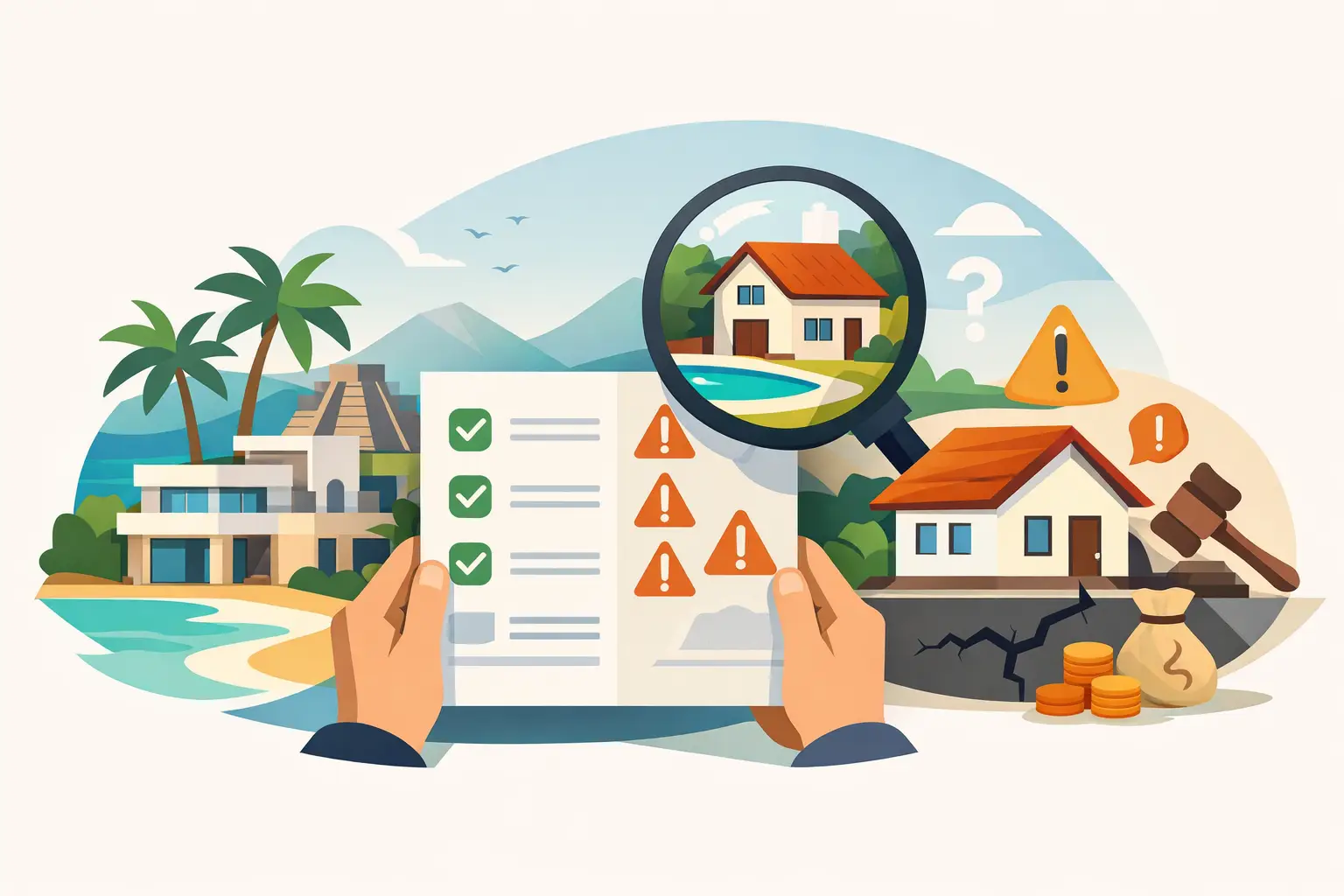
A Riviera Maya property can look perfect on paper – ocean proximity, strong rental projections, glossy finishes, and a launch price that feels like an early-entry advantage. Yet many costly decisions happen before a buyer ever gets to closing. If you want to know how to avoid Mexico property mistakes, the answer is not fear. It is disciplined due diligence, local market understanding, and a buying strategy built around your real objective.
In markets such as Tulum, Playa del Carmen, Akumal, Puerto Morelos, and Cancun, opportunity is real. So is variation in build quality, legal structure, developer reliability, rental performance, and resale potential. International buyers often assume that a beautiful brochure and a lower price per square foot mean value. Sometimes they do. Sometimes they are simply the most expensive shortcut you can take.
How to Avoid Mexico Property Mistakes Before You Fall in Love
The first mistake is emotional timing. Buyers often fall in love with the renderings, the rooftop pool, or the idea of owning in the Riviera Maya before they have tested whether the asset actually fits their plan. A property for personal use has different priorities than a property for short-term rental income. A retirement home has a different risk profile than a presale investment intended for appreciation and resale.
That distinction matters because many poor purchases are not bad properties in absolute terms. They are mismatched properties. A beachfront unit may be wonderful for lifestyle, but if maintenance costs are high and occupancy assumptions are inflated, it may not perform the way an investor expects. A lower-priced condo farther from the beach may look less glamorous, but if demand drivers, operating costs, and access are stronger, it can produce a more resilient return.
Before viewing inventory, define the hierarchy. Are you prioritizing cash flow, capital appreciation, part-time use, full-time living, or wealth preservation in a dollar-diversified asset? Once that is clear, filtering becomes easier and expensive distractions lose their power.
Not Every Great-Looking Deal Is a Great Asset
One of the most common Mexico property mistakes is evaluating a purchase based on price alone. Riviera Maya buyers frequently compare cost per square foot without weighing what actually protects value over time. Location still matters, but so do infrastructure, access roads, neighborhood maturity, water and utility reliability, beach conditions, rental regulations, and the quality of nearby hospitality and retail.
A low entry price in an emerging pocket can be attractive, especially in a growth market. But growth stories need scrutiny. Ask what is already operating, not just what is planned. Planned infrastructure can change. Brand partnerships can be overstated. Delivery timelines can move. If your return depends on five optimistic assumptions happening at once, you are not buying stability. You are buying a speculative chain of events.
The stronger asset is often the one with a more defensible story: a proven micro-location, credible demand, solid construction, manageable carrying costs, and a realistic exit path. That may not be the cheapest option. It is often the more intelligent one.
Presale Can Be Powerful, but It Is Not Passive
Presale attracts international buyers because it offers lower launch pricing, staged payment terms, and appreciation potential by delivery. Those benefits are real. The mistake is assuming presale is automatically the smart investor move.
With presale, the developer becomes one of the core elements of your investment thesis. Their track record, financial discipline, construction history, delivery reliability, and post-handover management standards matter just as much as the unit itself. A beautiful concept without execution is not an asset. It is a promise.
If you are considering presale, review prior projects in person whenever possible. Look at finish quality after real use, not just at the showroom. Ask whether prior phases were delivered on time, whether owners were satisfied, and how the common areas have held up. A strong developer can justify a premium. A weak one can turn a discount into a long and frustrating lesson.
Legal Structure Is Where Confidence Should Replace Assumption
Foreign buyers are sometimes unnecessarily intimidated by purchasing in Mexico, while others are far too casual about it. Neither approach serves you. Buying in restricted zones near the coast involves a legal structure that must be handled correctly, and that is precisely why experienced legal guidance is essential.
The mistake is relying on verbal explanations or informal reassurance instead of independent verification. Buyers should understand the ownership structure being used, the rights associated with it, the closing costs involved, the timeline, and the obligations that continue after closing. Contracts should be reviewed carefully in English and Spanish if needed, with particular attention to delivery terms, penalties, payment schedules, title conditions, and what exactly is included in the purchase.
This is also where hidden assumptions show up. Parking may not be included. Furnishing packages may differ from marketing images. HOA estimates can change. Closing timelines can be described casually until they affect your capital planning. Clarity is not a luxury in cross-border real estate. It is part of asset protection.
Due Diligence Should Be Independent
A polished sales process is helpful, but it should never replace independent review. Buyers need confirmation of permits, title status where applicable, condominium regime details, and the specific obligations tied to ownership. In resale, that includes confirming liens, unpaid fees, and transfer conditions. In new development, that includes verifying the legal and practical readiness of the project.
This is where experienced local advisory makes a measurable difference. The right team does not just present listings. It pressure-tests assumptions, identifies red flags early, and helps buyers compare opportunities through an investment lens rather than a marketing lens.
Rental Income Projections Deserve a Reality Check
Another frequent mistake is treating projected rental income as guaranteed performance. Riviera Maya remains one of the most compelling lifestyle and tourism markets in the Americas, but rentals are still an operating business. Revenue depends on seasonality, management quality, guest experience, location appeal, competition, platform strategy, and ongoing maintenance.
A projected nightly rate is only one small part of the picture. Occupancy assumptions matter. So do commissions, marketing fees, cleaning, utilities, reserves, furnishing, repairs, taxes, and HOA dues. A unit can look impressive on gross revenue and underwhelm on net yield.
There is also a practical difference between a property that rents and a property that rents well consistently. Layout, walkability, amenities, brand positioning, and guest expectations all influence that outcome. A one-bedroom in the right location can outperform a larger unit in the wrong product category. This is why buyers should ask for grounded performance analysis, not ideal-case scenarios.
The Wrong Team Can Cost More Than the Wrong Unit
Real estate in Mexico is relationship-driven, local, and highly variable by submarket. International buyers are most exposed when they try to simplify that complexity by trusting the nearest salesperson, the loudest promise, or the listing with the best photography.
The right advisor brings market nuance. They know which areas are maturing, which developers are trusted, which projects are overhyped, and where pricing no longer supports the return story. They also know when not to push a deal. That restraint is often what protects a buyer from the mistake they would only recognize a year later.
In a market as dynamic as the Riviera Maya, boutique guidance is often more valuable than volume. A buyer does not need more options. They need sharper filters, stronger local intelligence, and a process that aligns lifestyle goals with financial discipline.
How to Avoid Mexico Property Mistakes at Closing and Beyond
Some buyers think the risk ends at contract signature or closing. In reality, post-purchase planning is where a good acquisition becomes a strong ownership experience. If you plan to rent, you need a management strategy. If you plan to use the property seasonally, you need realistic budgeting for upkeep, insurance, utilities, and oversight. If you plan to resell, you should understand from day one what will make the asset attractive to the next buyer.
This is especially relevant in a fast-evolving market. Properties that hold value best tend to combine strong location fundamentals with quality management, durable design, and buyer-friendly functionality. Trend-driven product can perform brilliantly for a period, then fade if the concept ages poorly or if maintenance standards slip.
Working with an experienced Riviera Maya advisor such as Susann Rottloff can help buyers evaluate not only how to enter the market, but how to own well once they do. That difference matters when your purchase is part lifestyle choice, part investment strategy, and part long-term wealth positioning.
The best Mexico property decisions usually feel exciting after the analysis is done, not before. When a deal still makes sense after the legal review, the numbers, the location test, the developer check, and the exit strategy discussion, you are no longer buying on hope alone. You are buying with the kind of clarity that protects both the dream and the asset.
